
The Impressionist Trail in Paris is a walk through the city’s most evocative museums and gardens, tracing how light, modern life, and bold new techniques reshaped art at the turn of the 20th century. Centered on the Left Bank and the Tuileries, this guide links luminous galleries with elegant architecture - where a former railway station becomes a cathedral of color, and a sunlit pavilion frames paintings designed to be experienced as an immersive environment.
It’s ideal for first-time visitors who want a clear, curated route through Paris’s essential Impressionist masterpieces, as well as returning art lovers looking to connect the dots between painting and sculpture in the same cultural moment. Along the way, you’ll move from sweeping canvases to intimate studies, then into a serene garden setting where bronze figures and quiet paths give the eye - and the mind - a different way to absorb the era’s creative revolution.
Seen together, these attractions tell a fuller story of Paris as an engine of modern art: the shift from academic tradition to experimentation, the dialogue between artists working in different mediums, and the city’s talent for transforming grand spaces into unforgettable viewing experiences. By pairing landmark collections with places designed around light and atmosphere, the trail turns museum-hopping into a cohesive journey that feels distinctly Parisian.
Highlights
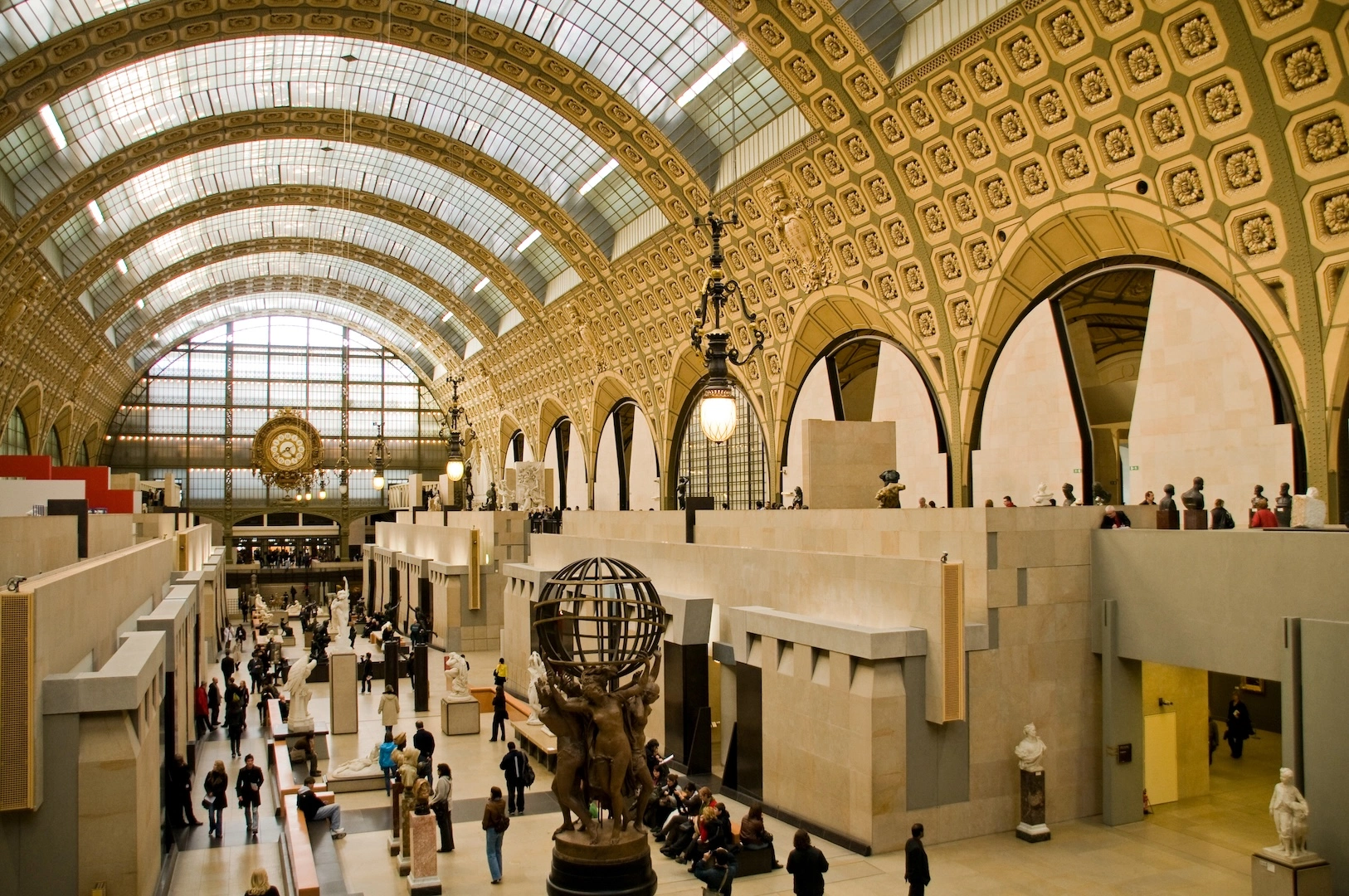
Step into a sunlit former 1900 railway station where the soaring glass nave and iconic clock frame masterpieces by Monet, Degas, and Van Gogh - Paris’s must-see temple of Impressionism.

In the Tuileries, lose yourself in Monet’s monumental Water Lilies glowing in serene oval rooms - an immersive, meditative stop that anchors Paris’s Impressionist story.

At elegant Hôtel Biron, encounter The Thinker and The Gates of Hell amid rose-filled gardens - an unforgettable pairing of Parisian calm and the birth of modern sculpture.
Step into a sunlit former 1900 railway station where the soaring glass nave and iconic clock frame masterpieces by Monet, Degas, and Van Gogh - Paris’s must-see temple of Impressionism.
In the Tuileries, lose yourself in Monet’s monumental Water Lilies glowing in serene oval rooms - an immersive, meditative stop that anchors Paris’s Impressionist story.
At elegant Hôtel Biron, encounter The Thinker and The Gates of Hell amid rose-filled gardens - an unforgettable pairing of Parisian calm and the birth of modern sculpture.
Suggested Order
The Orsay Museum Paris
Start with the biggest, most in-demand Impressionist collection early to beat peak crowds and enjoy the galleries with fresh energy.
Rodin Museum
A short hop away, its calmer indoor/outdoor flow is a perfect midday change of pace after Orsay’s dense galleries.
Orangerie Museum
End with Monet’s soothing Water Lilies near the Tuileries, ideal as a quieter late-afternoon finale with minimal backtracking.
Plan Your Route
Select Attractions
Transport Mode
Getting Around
Walk along the Seine toward Pont Royal, then cut inland via Rue de Lille to Rue de Varenne; follow signs for “Musée Rodin / Hôtel Biron.”
Head north toward the Seine and cross at Passerelle Léopold-Sédar-Senghor (footbridge) for a scenic route; once in the Tuileries, aim for Place de la Concorde - Musée de l’Orangerie sits at the garden’s southwest corner.
Best Time to Visit
The Orsay Museum Paris
Best time: Early morning at opening (first 30 - 60 minutes), ideally midweek
Avoid: Late morning to mid-afternoon (about 11:00 - 15:30) on weekends and school-holiday days, when tour groups arrive and the Impressionist rooms and clock viewpoints bottleneck, stretching entry/security and gallery crowds
Arriving right at opening gives you the shortest security/entry lines and the calmest experience in the top-floor Impressionist galleries before the midday surge.
Orangerie Museum
Best time: Early morning at opening (or the last 60 - 90 minutes before closing) on a weekday
Avoid: Midday (roughly 12:00 - 16:00), especially weekends, when timed-entry slots sell out, queues form at the entrance, and the Water Lilies oval rooms feel crowded and less contemplative
The Water Lilies rooms work best with space and quiet, and you’ll get both by going at the day’s edges when capacity pressure is lowest.
Rodin Museum
Best time: Late afternoon (about 16:00 to close) for softer light in the gardens and fewer school/tour groups
Avoid: Late morning to early afternoon (about 11:00 - 14:30) in good weather, when the sculpture garden becomes a peak stop, photo lines build around The Thinker, and indoor rooms feel busier
Late afternoon typically brings lighter crowds and better, warmer outdoor light for the garden sculptures while avoiding the midday tour-group wave.
The Orsay Museum Paris
Best time: Early morning at opening (first 30 - 60 minutes), ideally midweek
Avoid: Late morning to mid-afternoon (about 11:00 - 15:30) on weekends and school-holiday days, when tour groups arrive and the Impressionist rooms and clock viewpoints bottleneck, stretching entry/security and gallery crowds
Arriving right at opening gives you the shortest security/entry lines and the calmest experience in the top-floor Impressionist galleries before the midday surge.
Orangerie Museum
Best time: Early morning at opening (or the last 60 - 90 minutes before closing) on a weekday
Avoid: Midday (roughly 12:00 - 16:00), especially weekends, when timed-entry slots sell out, queues form at the entrance, and the Water Lilies oval rooms feel crowded and less contemplative
The Water Lilies rooms work best with space and quiet, and you’ll get both by going at the day’s edges when capacity pressure is lowest.
Rodin Museum
Best time: Late afternoon (about 16:00 to close) for softer light in the gardens and fewer school/tour groups
Avoid: Late morning to early afternoon (about 11:00 - 14:30) in good weather, when the sculpture garden becomes a peak stop, photo lines build around The Thinker, and indoor rooms feel busier
Late afternoon typically brings lighter crowds and better, warmer outdoor light for the garden sculptures while avoiding the midday tour-group wave.
Budget Breakdown
| Attraction | Entry Fee | Booking | Saving Tip |
|---|---|---|---|
€16 | Required | Go on the first Sunday of the month (typically free entry, but time slots can book out - reserve ahead when offered). | |
€12.50 | Required | Use the combined Musée d’Orsay + Musée de l’Orangerie ticket if you’re visiting both; it’s usually cheaper than buying two separate tickets. | |
€14 | — | Visit on the first Sunday of the month (typically free for permanent collections) to reduce costs. | |
Estimated total | €42.50 |
Where to Eat
Practical Tips
Reserve timed-entry online and arrive 15 - 20 minutes early; security lines can be longer than the ticket queue even with a slot.
For quick hops between these stops, use Bus 69/63 or walk along the Seine; it’s often faster than the Metro with transfers.
Bring a light layer: galleries can feel cool while garden areas are warm, and lockers are limited for bulky coats.
Start with the most popular rooms right at opening or in the last 90 minutes; midday tour groups create the biggest bottlenecks.
Photography rules vary by room; keep your phone silent, avoid flash, and step aside before shooting to keep traffic moving.
Eat at off-peak hours (before noon or after 2 pm) to avoid café lines; nearby boulangeries make an easy picnic in the gardens.
What to Skip
They’re often overpriced, sometimes invalid or time-restricted in ways that aren’t clear, and the “skip” part rarely saves much compared with booking properly.
Instead: Book official timed-entry on the museum’s own site (or go early weekday), and if you want a combo, use a reputable Paris Museum Pass only if you’ll genuinely hit multiple museums in 2 - 4 days.
Most are generic, low-quality reproductions at inflated prices (and many aren’t licensed), so you end up with a flimsy print that looks worse at home.
Instead: Buy from the Musée d’Orsay or Orangerie bookshops for better paper/printing, or check a proper print shop like Librairie Galignani or a specialist art bookstore for higher-grade reproductions.
It’s a slow, crowded loop that turns a beautiful, free garden stroll into a noisy, overpriced theme-park detour.
Instead: Walk the Tuileries at your own pace (aim for early morning), then continue on foot to Place Vendôme or Pont Alexandre III for classic Paris views without the tackiness.
You’re paying for the address, not the food - service can be rushed and the menus tend to be safe, expensive, and forgettable.
Instead: For Orsay/Rodin, eat in the 7th: try a simple lunch around Rue Cler or a nearby bakery picnic; for Orangerie, grab something from a good boulangerie and eat on a bench in the Tuileries.
They’re often overpriced, sometimes invalid or time-restricted in ways that aren’t clear, and the “skip” part rarely saves much compared with booking properly.
Instead: Book official timed-entry on the museum’s own site (or go early weekday), and if you want a combo, use a reputable Paris Museum Pass only if you’ll genuinely hit multiple museums in 2 - 4 days.
Most are generic, low-quality reproductions at inflated prices (and many aren’t licensed), so you end up with a flimsy print that looks worse at home.
Instead: Buy from the Musée d’Orsay or Orangerie bookshops for better paper/printing, or check a proper print shop like Librairie Galignani or a specialist art bookstore for higher-grade reproductions.
It’s a slow, crowded loop that turns a beautiful, free garden stroll into a noisy, overpriced theme-park detour.
Instead: Walk the Tuileries at your own pace (aim for early morning), then continue on foot to Place Vendôme or Pont Alexandre III for classic Paris views without the tackiness.
You’re paying for the address, not the food - service can be rushed and the menus tend to be safe, expensive, and forgettable.
Instead: For Orsay/Rodin, eat in the 7th: try a simple lunch around Rue Cler or a nearby bakery picnic; for Orangerie, grab something from a good boulangerie and eat on a bench in the Tuileries.